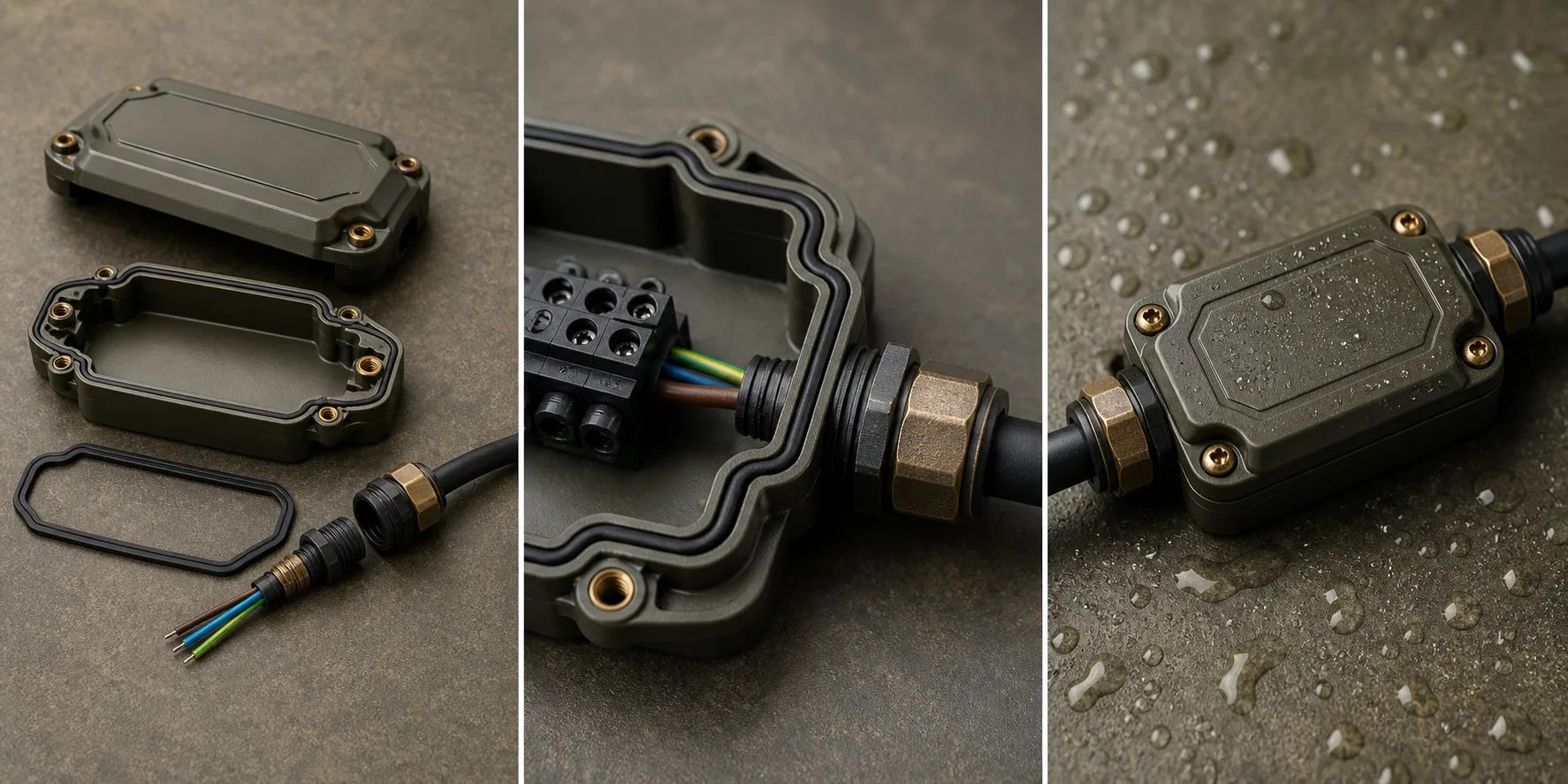
密封是一個系統
上、下蓋的接面、突出結構、導溝與密封圈位置互相影響。只看單一零件,很難判斷組裝後是否能持續保持壓縮。
纜線通道是關鍵邊界
連接元件除了固定纜線,也必須處理外力、間隙與水氣路徑。防水設計要同時考慮組裝與長期使用。
設計要能被驗證
尺寸公差、密封壓縮、拉力與進水測試應成為設計證據,才能證明概念在實際製造後仍然成立。
Sealing Is a System
Mating surfaces, protrusions, grooves, and gasket location influence one another. A single part cannot explain whether compression remains stable after assembly.
The Cable Path Is a Critical Boundary
The connector must manage cable retention, loads, gaps, and moisture paths. Assembly and long-term use both matter.
The Design Must Be Verifiable
Tolerance, gasket compression, pull force, and ingress tests provide evidence that the concept survives manufacturing.