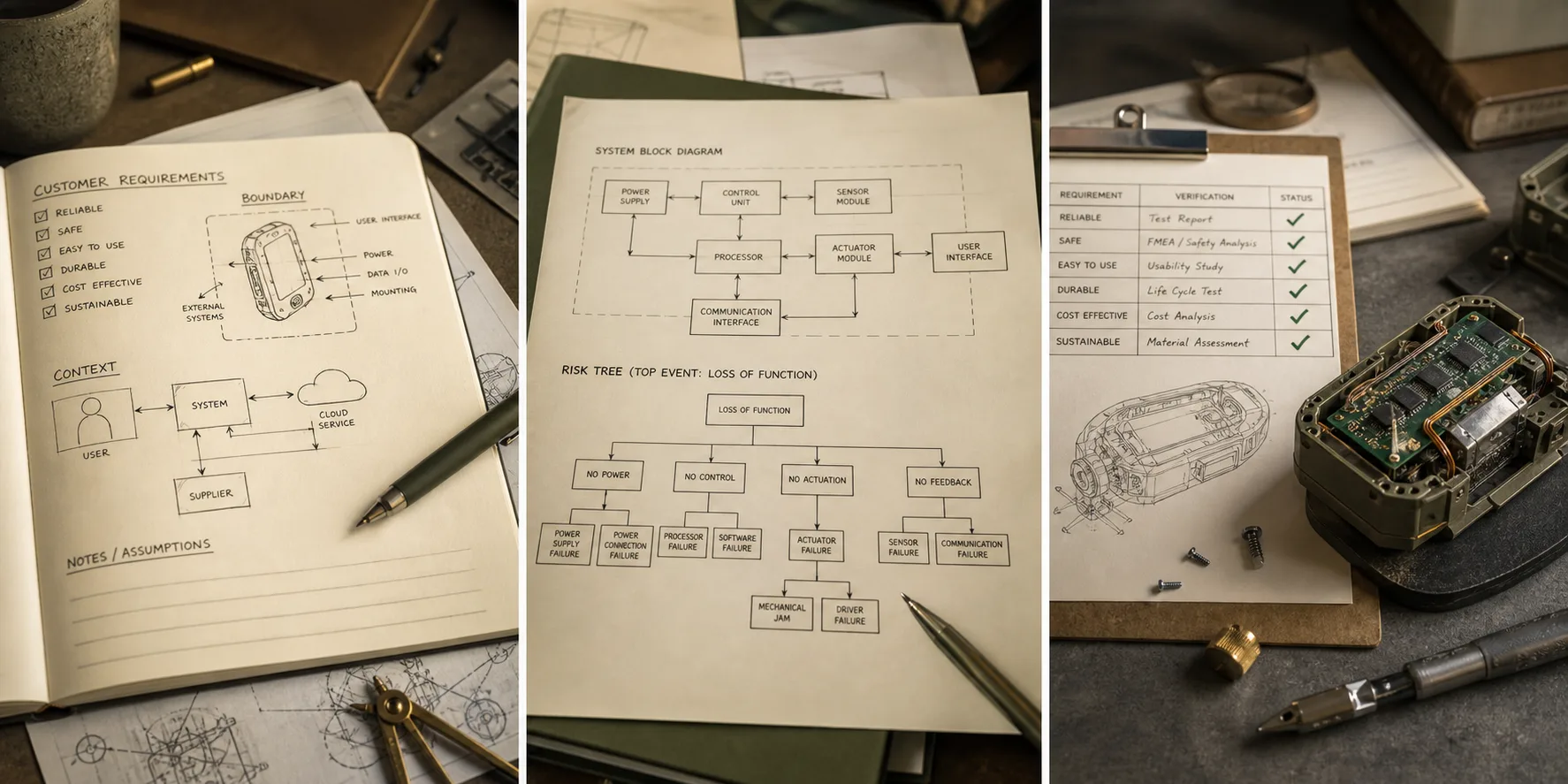
從需求開始,而不是從表格開始
先把客戶需求轉成參數圖、邊界圖與系統方塊圖,團隊才有共同的系統視圖。沒有這一層,後面的失效分析很容易只剩局部經驗。
用結構拆解風險
透過樹狀分解把功能、失效模式、原因與影響連起來,再討論 Critical Characteristics、Special Characteristics 與風險控制。
讓 DFMEA 接到驗證
DVP&R 應回應 DFMEA 找出的風險。分析與測試互相連結,才能把文件變成真正的產品可靠性工作。
Start with Requirements, Not the Form
Customer needs must first become parameter, boundary, and system block diagrams. Without a shared system view, failure analysis becomes fragmented.
Decompose Risk Structurally
Tree decomposition connects functions, failure modes, causes, effects, and the characteristics that require control.
Connect DFMEA to Verification
The DVP&R should answer the risks identified by DFMEA. Linking analysis and testing turns documents into reliability work.