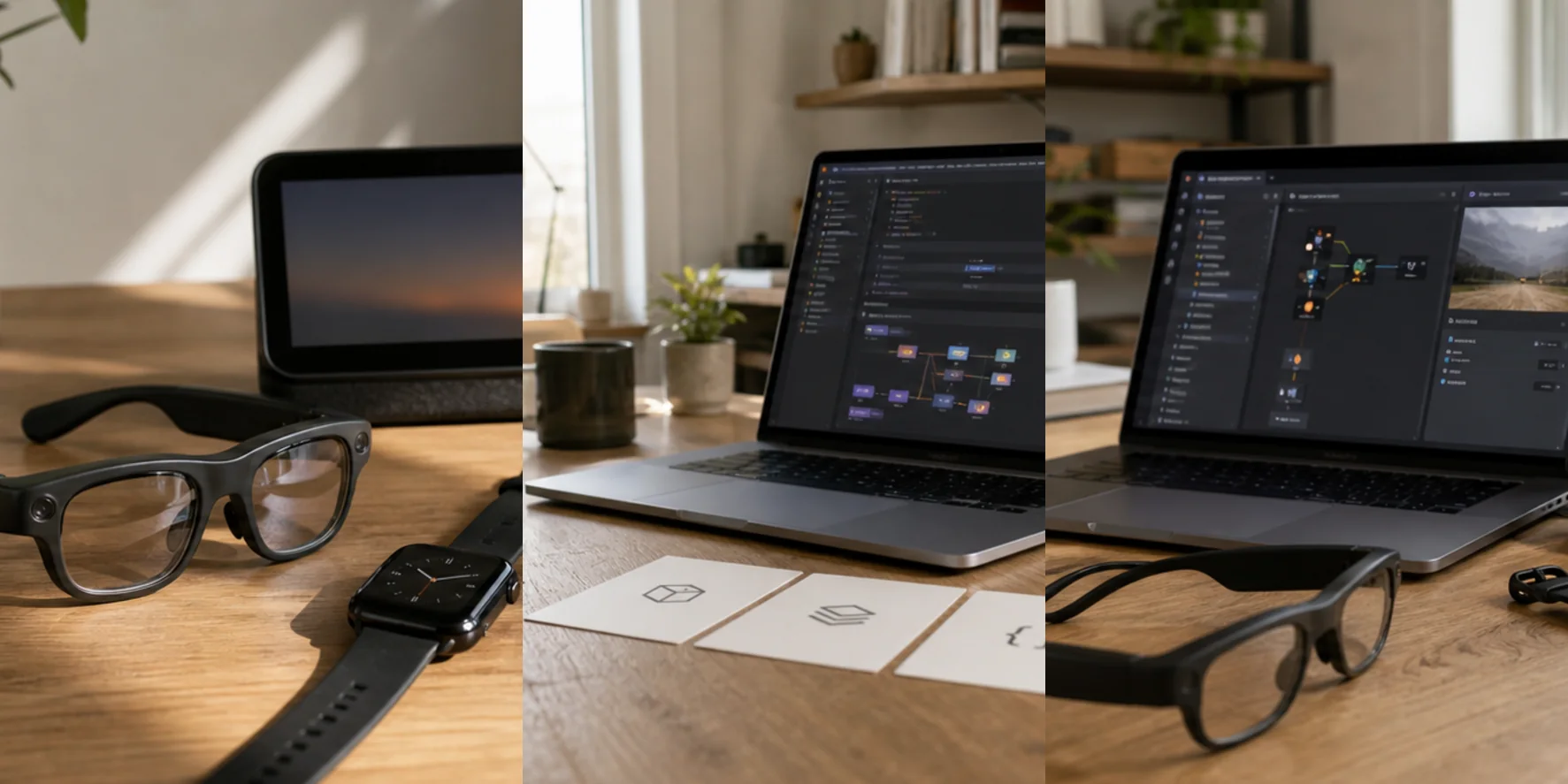
硬體能用,不代表它還能成長
AI 眼鏡、智慧手錶與智慧家電剛推出時,通常已有翻譯、提醒、導航或語音助理等功能。但使用者真正需要什麼,往往和工作、生活習慣與專業情境有關。原廠不可能預先理解每一種需求,也不可能把每個有用的 App 都做完。
當硬體仍然可用,功能卻完全綁在原廠 App 與更新週期上,裝置很容易停在一張固定的功能清單。使用者只能等待下一次更新,而無法把它改造成更符合自己的工具。
開放的價值,不只是在公開程式碼
Mark Zuckerberg 談開源 AI 時,重點不只是程式碼能不能下載,而是開發者能否修改、微調與延伸技術。當更多人能在共同的基礎上建立新能力,生態系能做出的事,就會超過單一公司可以獨自完成的範圍。
我認為這個觀點也適用於 AI 裝置。裝置需要的不只是內建 AI,而是穩定的 SDK、API、權限設計、開發工具與 App 發布入口。這些基礎做好,開發者才能把自己的工作流程、專業需求與生活場景放進裝置裡。
從裝置走向平台
Pebble 創辦人 Eric Migicovsky 將手錶軟體完整開源時,也特別強調 SDK、開發工具與 App Store 能否持續運作。Google 的 Android XR 則試圖把眼鏡與頭戴裝置放到統一的平台上,讓開發者用熟悉的 Android 工具建立新體驗。
這背後是一個很實際的判斷:下一代 AI 裝置的競爭,不應只比較規格或預載多少功能,而要看它能不能被持續擴充、被不同情境重新定義。
我會用四個問題看一個 AI 裝置
- 它是否提供清楚、穩定的 SDK 與 API?
- 開發者能否快速測試並發布 App?
- 使用者能否找到真正符合自己情境的功能?
- 即使原廠調整路線,裝置與社群是否仍有繼續成長的可能?
最有競爭力的 AI 裝置,也許不是功能最多的那一台,而是最容易被使用者與社群重新定義的那一台。
Working Hardware Does Not Mean a Device Can Still Grow
AI glasses, smartwatches, and home devices often launch with translation, reminders, navigation, or a voice assistant. But useful needs depend on work, habits, and professional context. No manufacturer can predict every use case or build every useful app.
When hardware still works but its capabilities remain tied to the manufacturer's apps and release schedule, the device becomes a fixed feature list. Users can only wait for updates instead of reshaping it into a tool that fits their own work and life.
Openness Is More Than Publishing Code
When Mark Zuckerberg argues for open AI, the point is not only whether code can be downloaded. It is whether developers can modify, fine-tune, and extend technology. A larger ecosystem can build capabilities that one company cannot build alone.
I think the same idea applies to AI devices. They need more than built-in AI. They need stable SDKs, APIs, permission models, developer tools, and a way to distribute apps. With those foundations, developers can bring their own workflows, expertise, and real-life situations into a device.
From Device to Platform
When Pebble founder Eric Migicovsky made its watch software open source, he also emphasized keeping the SDK, developer tools, and app store alive. Google is taking a related direction with Android XR, a unified platform for glasses and headsets built with familiar Android tools.
This suggests a practical way to judge AI hardware. The next competition should not be only about specifications or preloaded features. It should be about whether a device can be extended and redefined for different contexts over time.
Four Questions I Would Ask
- Does it offer clear, stable SDKs and APIs?
- Can developers test and publish apps without unnecessary friction?
- Can users find functions that fit their own context?
- Can the device and its community keep growing even if the manufacturer changes direction?
The strongest AI device may not be the one with the most features. It may be the one that people and communities can keep redefining.