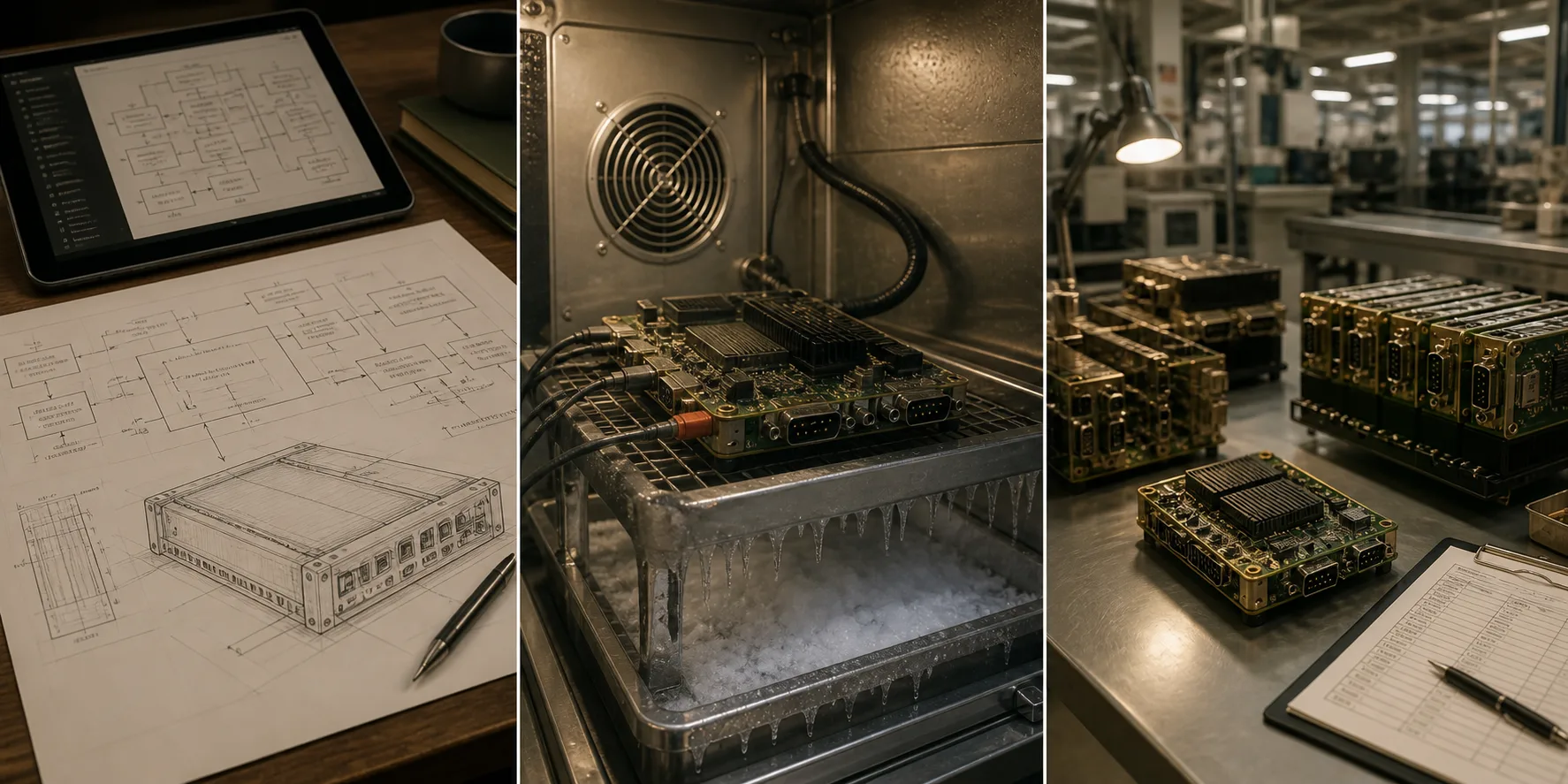
需求分析決定方向
先理解功能、性能、可靠性、環境與安全需求,才能建立硬體、系統、功能和安全架構。太早選零件,容易把系統問題縮成規格比較。
風險與可靠性要提早進場
溫度、震動、電源、散熱、零件壽命與失效模式,應在設計初期被評估,而不是等測試失敗才補救。
系統生命週期
好的設計還要能被製造、維修、獲利並長期供應。系統工程師的工作,就是讓技術決策與整個產品生命週期接起來。
Requirements Set Direction
Function, performance, reliability, environment, and safety requirements must precede architecture. Choosing parts too early reduces a system problem to a specification comparison.
Bring Risk and Reliability In Early
Temperature, vibration, power, thermal behavior, component life, and failure modes belong in early design, not only after tests fail.
The System Life Cycle
A design must also be manufacturable, serviceable, profitable, and supportable. Systems engineering connects technical decisions to the product life cycle.